


You might have caught a glimpse of your smile in a photo or a mirror and thought, “When did my teeth get this dull?” Maybe you drink coffee, tea, or red wine, or you used to smoke, and now your teeth look more yellow than you are comfortable with. You want a brighter smile, but you are also worried. Will it hurt. Will it damage your teeth. Is it worth the money. Visit suncreekdental.com to explore your options. You are not being vain. You are being honest about how much your smile affects your confidence.end
If you live in Colorado, there is another layer to your concern. The air is dry, the sun is strong, and daily life is busy. You want something safe and effective, not a random kit from the store that may or may not work. This guide to professional teeth whitening will walk you through what really happens at the dentist, what you can expect to feel and see, and how to decide if it is the right step for you. In short, professional whitening can dramatically brighten your teeth in a controlled way, it usually causes only temporary sensitivity, and it is safer and more predictable than trying to figure it out alone at home.
Why does your smile feel “off,” and what are you really worried about?
It often starts small. You see an old photo where your teeth looked whiter, or a family member comments on your “coffee teeth” as a joke, and it sticks with you. You might start avoiding smiling in pictures or covering your mouth when you laugh. You know whitening strips and online kits exist, but you also hear stories about burned gums, extreme sensitivity, or money wasted on products that barely work.
Because of this tension, you might wonder if going to a dentist for whitening is actually any different. You may worry that they will judge you for how your teeth look. Or that you will pay for an in-office treatment and still not get the bright, natural result you hope for. Underneath all of this is a simple wish. You want to feel comfortable in your own smile without feeling like you are taking a risk with your health.
What really causes tooth discoloration, and why does that matter in Colorado?
Not all stains are the same, and that is one of the biggest reasons results vary so much from person to person. Some discoloration sits on the surface from coffee, tea, red wine, or tobacco. Other staining lives deeper in the tooth, related to age, medications, past trauma, or natural enamel thickness. People in Colorado also deal with very dry air, which can make teeth feel more sensitive in general, and a lot of outdoor sun exposure, which can make you more aware of how your smile looks in bright light.
Because different stains respond differently to whitening, a professional has to look at your teeth first. If you have surface stains, whitening can work very well. If you have internal discoloration or old fillings and crowns in the front, the approach may need to be adjusted. Without that evaluation, you are essentially guessing. That is where frustration often begins.
What can go wrong with DIY whitening, and how does the dentist approach it differently?
Imagine you pick up a random whitening kit at the store or order one online. The gel might be weak, so you see little to no change. Or it might be strong, but the trays do not fit, so the gel leaks onto your gums. You end up with sore gums, white patches, and teeth that feel like they “zing” when you drink cold water. You are left wondering if you should keep going, stop altogether, or try something else.
Now compare that to a professional whitening plan. Before anything touches your teeth, the dentist checks for cavities, gum disease, exposed roots, thin enamel, or cracked teeth. If any of those are present, they are either treated first or the whitening plan is adjusted. The dentist also looks at your current shade and your goals, then sets realistic expectations. You might be told that your teeth can get several shades lighter, but not “paper white,” or that one darker tooth may still look slightly different and could need extra attention.
If you want more science and background, you can read the Colorado Dental Association’s guide to whitening, which explains how professional products and safety checks work in plain language. You can find it in their patient whitening brochure.
So what actually happens during professional teeth whitening in a dental office?
Most in-office whitening in Colorado follows a similar pattern, even though brands and exact products may differ.
First, there is an exam and shade check. The dentist or hygienist looks at your teeth and gums, may take photos, and notes your current shade so you have a “before” to compare to later.
Next, they protect your gums, lips, and cheeks. A barrier material and cotton or foam are used so the whitening gel touches only your teeth. This step is a key difference from many at-home kits.
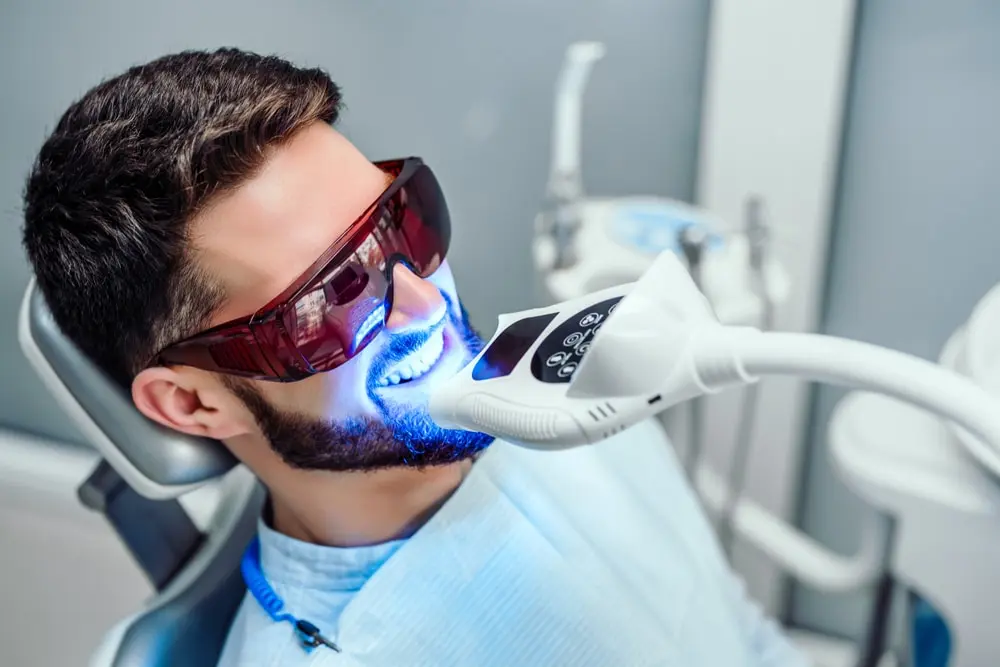
Then the whitening gel is applied. It usually contains a professional strength form of hydrogen peroxide or carbamide peroxide. It is left on for a set time, often in short sessions within the same visit, sometimes activated with a curing light.
After each session, the gel is removed, your teeth are rinsed, and your comfort is checked. If you feel sensitivity, time or strength can be adjusted. Most people notice a change right away, though the final shade often settles over a few days.
Finally, you get aftercare instructions. You might be asked to avoid strong staining foods and drinks for 24 to 48 hours. You may be given a sensitivity toothpaste or a fluoride product to use at home. This whole process usually takes about an hour to an hour and a half.
For more detailed science and safety information, you can also review the American Dental Association’s overview of whitening options and evidence on their page about tooth whitening for patients.
How does professional whitening compare to at-home methods?
You might still be weighing your options and wondering if you should try strips first or go straight to an in-office treatment. This comparison can help you see the tradeoffs more clearly.
| Whitening Option | Typical Results | Safety & Supervision | Timeframe | Best For |
|---|---|---|---|---|
| In-office professional whitening | Fast, noticeable lightening, often several shades in one visit | High, fully supervised with custom protection for gums and teeth | About 60 to 90 minutes in a single appointment | People wanting quick, controlled results and professional guidance |
| Custom take-home trays from dentist | Gradual but strong results over 1 to 3 weeks | Moderate to high, dentist provides tailored trays and gel strength | Worn daily or nightly for a set period | Those who prefer to whiten slowly at home with professional support |
| Over-the-counter strips or kits | Mild to moderate change, often uneven or limited | Lower, no exam to check for problems before use | Daily use for several days to weeks | People with healthy teeth seeking a small boost and willing to accept trial and error |
When you see it laid out like this, the pattern is clear. The more supervision and customization you have, the more predictable and controlled the outcome. That is the core advantage of professional teeth whitening in Colorado, especially if you already have some sensitivity or dental work.
What should you expect to feel during and after whitening?
During in-office whitening, most people feel pressure from the cheek retractors and a sense of “coolness” or tingling on the teeth. Some feel occasional short bursts of sensitivity, like a quick zap. These usually fade when the gel is removed or when the session ends.
After whitening, your teeth might be more sensitive to cold air, water, or sweet foods for a day or two. This is common and usually temporary. Using a sensitivity toothpaste with potassium nitrate and fluoride, avoiding very hot or cold drinks, and following your dentist’s instructions usually keeps it manageable. If you already know you have sensitive teeth, tell the dental team in advance. They can adjust the product strength or application time.
Three practical steps you can take right now
1. Get an honest evaluation before you whiten
Schedule a simple exam and cleaning, and be open about your whitening goals. Ask the dentist to explain what type of staining you have, how many shades of improvement are realistic, and whether any teeth with fillings or crowns will look different. This helps you avoid disappointment and choose the right method from the start.
2. Protect your teeth before and after treatment
Start using a fluoride or sensitivity toothpaste at least two weeks before whitening. This can strengthen enamel and reduce post treatment discomfort. After whitening, follow the “white diet” guideline for a day or two. Limit foods and drinks that would stain a white shirt, such as coffee, tea, red wine, berries, and dark sauces. This helps your new shade stabilize.
3. Think beyond the one-time treatment
Whitening is not permanent. Stains slowly return as you eat and drink. Ask your dentist about a long term plan. This might include custom trays for small touch ups at home, regular cleanings, and habits like rinsing with water after coffee. Planning for maintenance keeps your smile brighter and protects your investment.
Where does this leave you and your decision about whitening?
You do not have to live with a smile that makes you self conscious, and you also do not have to gamble with your teeth using products you are unsure about. With a thoughtful approach, professional whitening services can give you a noticeable, natural looking change while keeping your teeth and gums safe.
The next step is simple. Talk to a trusted dentist, ask direct questions about options, costs, and expected results, and share any worries you have about sensitivity or past experiences. You deserve clear answers, a plan that fits your life in Colorado, and the quiet confidence that comes from a smile you are proud to show.
Also Read
